

A heater not blowing hot air may have incorrect thermostat settings, restricted airflow, a furnace ignition problem, or a heat pump fault. Sometimes the fan is simply circulating room-temperature air between heating cycles. If your heater isn’t working, start with the safe checks below. Leave ignition, combustion, refrigerant, and electrical repairs to a qualified technician.
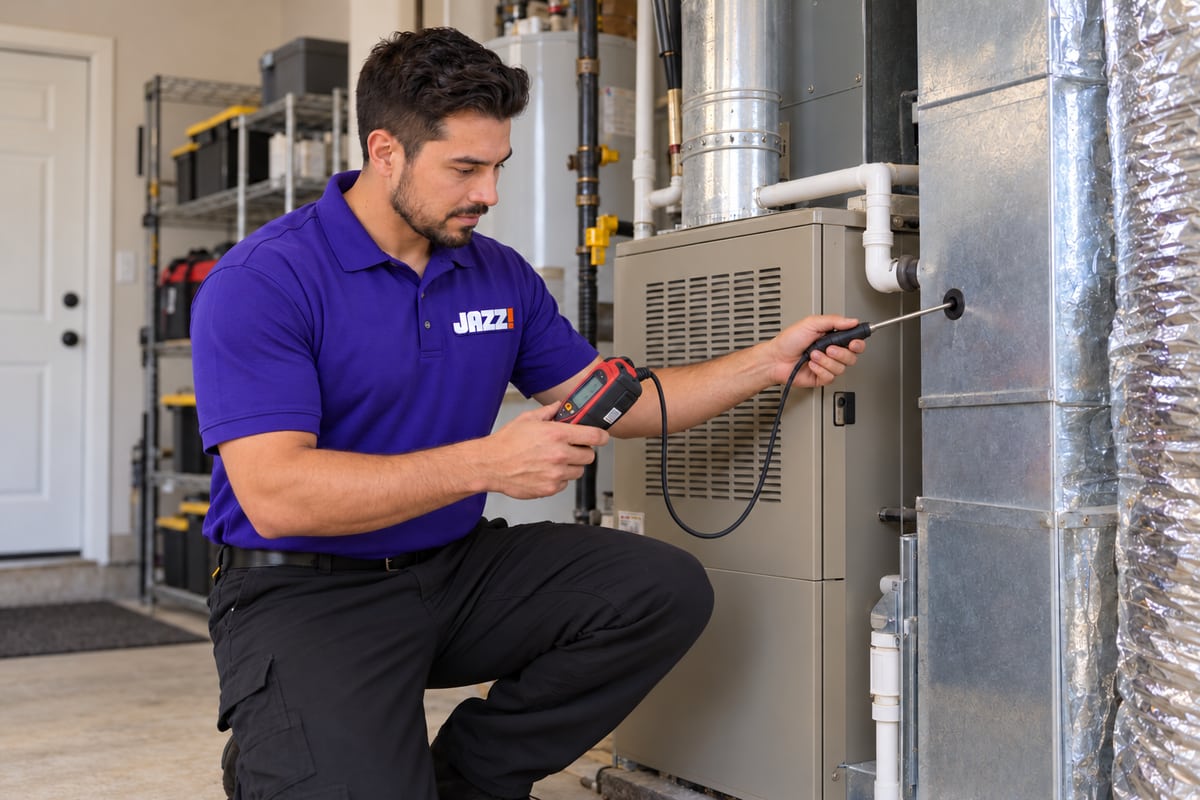
Technician scenes in this article are AI-generated illustrations.
Start Here: 5 Safe Checks When Your Heater Isn’t Working
- Confirm Heat mode. Set the thermostat above room temperature and review its schedule. Replace user-accessible batteries according to its manual if the display is blank.
- Select fan Auto. On usually runs the fan between heating cycles, circulating unheated air. Allow the normal startup delay described in your equipment manual.
- Inspect the filter. Turn the system off at the thermostat. Replace a dirty, user-accessible filter with the specified size and type, following its airflow arrow. Avoid opening equipment compartments.
- Check external power controls. Look for an accidentally switched-off service switch or a tripped, labeled breaker. Do not remove panel covers or repeatedly reset a breaker; arrange service if it trips again.
- Clear supply and return vents. Move furniture, rugs, and curtains away from grilles. Keep registers open rather than closing rooms to force more heat elsewhere.


Why Is My Heater Not Blowing Hot Air? 9 Common Causes
A running fan does not prove that the heating components are working. These symptoms can narrow the possibilities, but a technician must confirm the cause.
1. Incorrect thermostat settings
Cool mode, a low setpoint, or an overriding schedule can prevent a call for heat. Fan On can explain continuous cool airflow. Check mode, fan, schedule, and batteries. If settings are correct but the system ignores them, have thermostat compatibility and controls checked; do not change wiring.
2. Clogged air filters and restricted airflow
Weak airflow and brief heating cycles may indicate restriction. In a gas furnace, insufficient airflow can cause overheating and a safety shutdown. Replace an accessible dirty filter as directed above. If airflow stays weak, a technician should check the blower, coils, and duct system.
3. Gas supply or furnace ignition problems
A gas furnace may attempt to start without producing sustained heat when fuel supply or ignition fails. Check your utility’s service notices, but leave gas valves, burners, and pilot lights alone. Persistent failed starts call for furnace repair services. Heat pumps do not use gas burners unless paired with a separate furnace.
4. Faulty or dirty flame sensor
A gas furnace that lights briefly and shuts down may not be proving flame reliably. The sensor helps the controls stop fuel flow when flame is not confirmed. Other faults can produce similar symptoms. Record any code visible through an external viewing window and call a technician; do not remove or clean combustion components yourself.
5. Overheating and high-limit safety shutdowns
Warm air followed by cooler airflow can occur when a furnace limit shuts the burners off while the blower removes heat. A blocked filter, poor airflow, or another fault may be responsible. Check accessible filters and vents. Recurring shutdowns need professional diagnosis; never bypass a safety switch. Water near a condensing furnace can also signal a drainage problem requiring service.
6. Heat pump defrost cycles and reversing valve issues
A heat pump may briefly deliver cooler air while defrosting its outdoor coil. Steam outdoors can accompany normal defrost. If heating does not resume or the indoor temperature keeps falling, controls or the reversing valve may be involved. Check thermostat settings and request heat pump repair rather than attempting valve adjustments.
7. Heat pump refrigerant or outdoor-unit problems
Long run times, persistent heavy ice, or an outdoor unit that is not operating can accompany poor heat transfer. Refrigerant leaks, fan problems, and defrost faults are possibilities. Clear loose leaves around the unit from a safe distance. Do not chip ice, pour hot water on it, or add refrigerant; have a technician inspect it.
8. Electrical, control board, or blower-related failures
A blank thermostat, no airflow, or a fan running without heat may involve power, controls, or the blower. Some systems power indoor and outdoor equipment separately. Inspect only external switches and breaker indicators. Burning electrical odors, repeated trips, or grinding noises mean stop using the system and arrange professional service.
9. Leaky ductwork or blocked airflow
Warm rooms alongside cold ones can point to obstructed registers, duct leaks, insulation issues, or zoning problems. Heat may escape before reaching distant rooms. Check accessible grilles and compare airflow between rooms. Leave attic, crawl-space, duct sealing, and zoning inspections to a professional when access or repairs are unsafe.
Heater Running but Not Heating vs. Heater Won’t Turn On
Use this comparison to describe the problem when scheduling service. Each symptom has several possible explanations.
| Symptom | Possible causes | Recommended next step |
|---|---|---|
| Fan blows cold air continuously | Fan On, ignition failure, or safety shutdown | Select Auto; request diagnosis if cold airflow continues. |
| Heater does not turn on | Thermostat, power, control, or safety fault | Check settings and external power; avoid internal repairs. |
| Heat starts but stops quickly | Restricted airflow, flame-proving, or limit problem | Check filter and vents; call for recurring shutdowns. |
| Some rooms warm; others cold | Blocked vents, duct leakage, or zoning issue | Clear grilles; arrange an airflow assessment. |
| Heat pump air feels cooler than expected | Normal lower supply temperature, defrost, or equipment fault | Watch room-temperature recovery; call if it keeps falling. |
Furnace vs. Heat Pump: Why the Difference Matters
A gas furnace burns fuel and transfers heat through a heat exchanger. A heat pump moves heat from outdoors using refrigerant. Its supply air can feel cooler than furnace air while still warming your house. Judge comfort by whether room temperature approaches the setpoint, rather than by touch alone. Brief startup or defrost changes can be normal; prolonged cold airflow with falling indoor temperature deserves diagnosis. Backup heating, where installed, also needs proper operation.
When Should You Stop Troubleshooting and Call a Professional?
Stop if breakers trip repeatedly, ignition fails, safety shutdowns recur, electrical burning smells develop, or equipment makes unusual banging, grinding, or squealing noises. Persistent lack of heat after basic checks also warrants service. Turn the system off at the thermostat if safe, and describe the symptoms to the technician. Do not repeatedly restart equipment or bypass protections.
How to Prevent Heating Problems
Inspect filters regularly and replace them according to the equipment and filter instructions; dust, pets, and heavy use can shorten the interval. Keep vents clear and report new noises, odors, leaks, or short cycling. Arrange seasonal heating maintenance before Northern California’s colder weather. Professional checks should address furnace combustion and safety controls or heat pump defrost, electrical components, and backup heat as applicable.
Get Your Heater Working Again With Jazz
If basic checks do not restore comfort, Jazz provides professional heating repair across its Northern California service area, including Pleasanton and Sacramento. Tell the team whether you have a furnace or heat pump, what the thermostat displays, and when the problem started. Schedule a visit for diagnosis and recommended next steps.
Heater Not Blowing Hot Air — Frequently Asked Questions
Why is my heater blowing cold air when the thermostat is on Heat?
Heat mode alone does not confirm that heat is being produced. Fan On may circulate unheated air between cycles, while a furnace ignition or airflow fault can stop heating. Check the fan setting and accessible filter. If cold airflow persists, a technician should evaluate the system.
Why is my heater running but not heating my house?
You may hear the blower even when the burners, heat pump compressor, or other heating components are not operating correctly. Duct leakage or restricted airflow can also reduce delivered heat. Note whether airflow is weak, heat stops quickly, or only certain rooms stay cold to help guide professional diagnosis.
Is it normal for a heat pump to blow cool air?
Heat pump air can feel cool against your skin while still being warmer than room air. Brief defrost cycles may also change supply temperature. Watch whether the home warms toward its setpoint. Extended cold airflow, heavy persistent ice, or falling room temperature calls for service.
Can a dirty air filter cause my heater to stop producing heat?
Yes. A heavily restricted filter can reduce airflow enough for a furnace to overheat and shut off its burners on a safety limit. The fan may continue running. Replace an accessible filter with the specified type, but arrange service if the shutdown repeats or normal heating does not return.
When should I call an HVAC technician if my heater isn’t working?
Call when thermostat, filter, vent, and external power checks do not restore heat, or when ignition failures, recurring shutdowns, unusual noises, or repeated breaker trips occur. Leave gas, refrigerant, and electrical work to professionals. For gas odors or a carbon monoxide alarm, evacuate and contact emergency help from outside.