



Outlets stopped working but the breaker is not tripped? A tripped GFCI, switched outlet, failed receptacle, loose connection, or interruption upstream can explain the loss of power. Standard breakers primarily protect against overloads and short circuits; an interrupted connection may stop power without drawing enough current to trip one. Start with safe external checks. Leave opening receptacles, wiring repairs, and work inside an electrical panel to a qualified electrician.
Outlets Stopped Working? Start With These 5 Safe Checks
- Check the device. Only if the outlet is dry, undamaged, and has no warning signs, try a small lamp known to work elsewhere. A failed charger or power strip can mimic a dead outlet.
- Look for a tripped GFCI. A ground-fault circuit interrupter has Test and Reset buttons. Check bathrooms, kitchens, garages, laundry areas, and outdoor locations; one GFCI may protect other regular outlets. Follow its instructions for one reset only when everything is dry and undamaged. Repeated trips or failure to reset need professional attention.
- Check wall switches. A living-room or bedroom switch may control the entire outlet or just one socket. Try its normal operation if safe.
- Visually check the breaker. A tripped handle may sit between On and Off and look nearly on. For a clearly identified tripped breaker, follow its instructions: move it fully Off, then back On once, only at a dry, undamaged panel that is safe to operate. Never remove covers, manipulate unknown circuits, or keep resetting.
- Note other affected outlets. Use normal, safe operation to identify which outlets and rooms lost power. Record when it started; do not dismantle outlets or trace concealed wiring.
8 Reasons Outlets Stop Working When the Breaker Isn’t Tripped
1. A GFCI Outlet Has Tripped
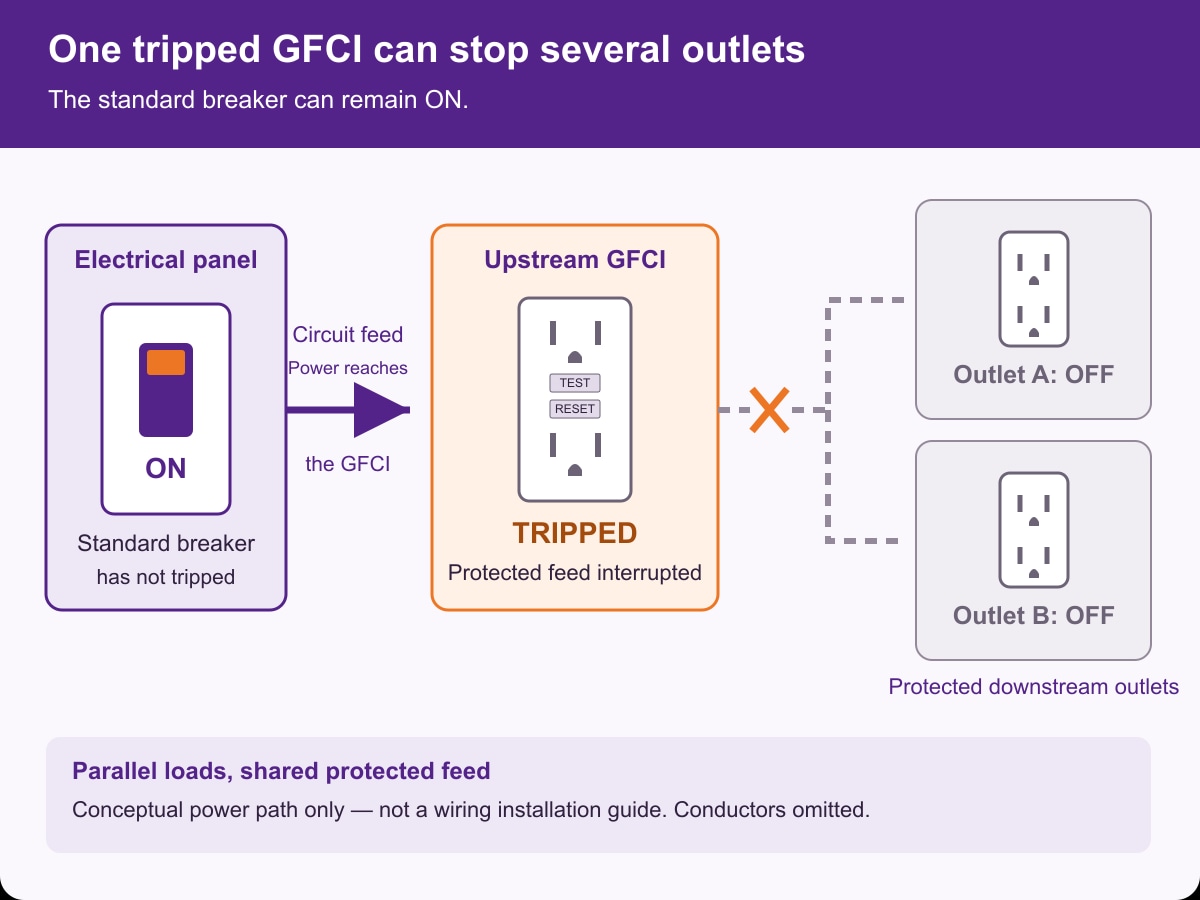
A GFCI detects an imbalance between outgoing and returning current and disconnects power to reduce shock risk. Its trip can leave the standard breaker on while shutting off protected downstream outlets. Look for the protecting GFCI, possibly in another room. If it will not reset, missing supply power or a fault may be responsible; an electrician should diagnose it.

2. The Outlet Is Controlled by a Wall Switch
A switched receptacle may seem dead when its wall switch is off. A split or half-switched duplex can leave one socket working and the other off. Check nearby switches normally. If neither switch position restores power, or operation becomes intermittent, stop relying on the outlet and arrange inspection.
3. The Electrical Outlet Has Failed
Worn contacts, aging parts, and physical damage can interrupt electrical continuity. Loose-fitting plugs, discoloration, intermittent operation, or melting need attention. A lamp check is appropriate only without damage or other hazards. Stop using a suspect receptacle and have a qualified electrician diagnose and replace it.
4. Loose or Damaged Wiring Has Interrupted Power
A deteriorated termination or broken conductor can interrupt power without an overload. Loose connections can also overheat or arc. Flickering or intermittent power may be a clue, not a diagnosis. There is no homeowner wiring check here: leave boxes closed and request professional inspection and repair.
5. An Upstream Outlet or Connection Has Failed
Household receptacles are generally wired electrically in parallel. However, power can pass through connections at one outlet or junction before reaching others. A failed feed-through connection can therefore disconnect several downstream outlets. Note the affected locations; an electrician can locate the interruption. Do not open the last working outlet to investigate.
6. The Breaker or Circuit Protection Has Malfunctioned
A handle that appears on may actually be tripped; some mechanisms need to move fully Off before resetting On. Use only the one safe reset described above. A defective breaker can also fail to supply power. GFCI and arc-fault circuit interrupter (AFCI) breakers have additional protection functions and their own indicators. Read the accessible labeling. Persistent loss of power or recurring trips needs professional circuit testing, not DIY breaker replacement.
7. The Appliance or Electrical Device Is Defective
A failed lamp, charger, appliance, or power strip can make an outlet appear powerless. With no hazard signs, compare using a known-working small lamp. If that works, stop using the suspect device and follow its service instructions. Trips associated with an appliance require diagnosis before reuse.
8. Concealed Wiring Has Been Damaged
Power loss following remodeling, nails or screws entering walls, rodent activity, aging wiring, or water intrusion may involve concealed conductors. Tell the electrician about recent events; do not probe walls or expose wiring. Have confirmed damage addressed through professional electrical wiring repairs. An isolated fault does not automatically require whole-home rewiring.
One Outlet Not Working vs. Multiple Outlets Not Working
These patterns suggest possibilities, not confirmed diagnoses. An electrician must establish the actual cause.
| Symptom | Possible explanation | What to do next |
|---|---|---|
| One outlet has no power | Switched or failed receptacle; local connection fault | Check a nearby switch; arrange diagnosis if unresolved. |
| Several outlets in one room have no power | Tripped GFCI or interrupted upstream feed | Check accessible GFCIs; note affected locations. |
| Kitchen or bathroom outlets stopped working | GFCI protection may have operated | One safe reset per instructions; call if it fails or trips again. |
| One duplex socket works; the other does not | Half-switched outlet or receptacle fault | Check nearby switches; have persistent trouble inspected. |
| Outlet works intermittently | Worn contacts or a loose connection | Stop using it and request inspection. |
| GFCI outlet will not reset | Missing supply, connected fault, or failed GFCI | Leave it alone and call an electrician. |
| Scorch marks or burning odor | Possible overheating or arcing | Stop use; seek urgent help. Evacuate for smoke or fire. |
| Outlets are dead but lights still work | Separate lighting circuit or interrupted outlet feed | Report the pattern; working lights do not prove outlet safety. |
Why Didn’t the Circuit Breaker Trip?
An overload draws more current than a circuit is rated to carry. A short circuit creates an unintended low-resistance path and potentially very high current. Standard breakers respond to overcurrent. An open circuit breaks the path, so current stops instead; a loose connection may overheat without sufficient overcurrent to trip the breaker.
A ground fault sends current along an unintended path toward ground. Some produce enough current to trip a standard breaker; smaller leakage may not. GFCIs detect current imbalance primarily for shock protection. AFCIs detect certain arcing patterns to reduce fire risk. Neither detects every electrical problem, and an apparently normal breaker does not guarantee a safe outlet.
When Is a Dead Outlet an Electrical Emergency?
Burning smells, smoke, scorching, buzzing, crackling, sparks, visible arcing, shocks, hot outlets, water exposure, or intermittent power associated with damage require urgent attention. Unexpected power loss across multiple areas also warrants prompt professional assessment. Stop using affected outlets and avoid touching damaged equipment. If smoke, fire, or immediate danger is present, leave the affected area and contact emergency services. Arrange inspection before reuse; Jazz offers emergency electrician services.
How Professional Electricians Diagnose Dead Outlets
A professional assessment generally includes evaluating symptoms and affected areas, checking circuit protection and supply, testing with appropriate equipment, locating defective receptacles or connections, explaining repairs, and verifying safe operation afterward. If diagnosis identifies a protection problem, electrical panel repair may be relevant. A dead outlet alone does not establish a need for a panel upgrade or extensive rewiring.
How to Prevent Electrical Outlet Problems
Keep receptacles dry and avoid overloaded power strips. Have worn or damaged outlets replaced professionally. Report loose-fitting plugs, intermittent operation, and deteriorating wiring early instead of waiting for failure. Arrange an electrical inspection when warning signs appear; timely repairs can address hazards before they worsen.
Need Help With Outlets That Stopped Working? Call Jazz
Jazz provides electrical troubleshooting and outlet repairs in Pleasanton and the Bay Area of Northern California. Describe which outlets stopped working, any recent changes, and warning signs. Schedule service for diagnosis and clear repair recommendations.
Frequently Asked Questions
Why would an outlet stop working if the breaker isn’t tripped?
A tripped GFCI, switched receptacle, worn outlet, or interrupted connection can stop power while a standard breaker remains on. An open connection may stop current rather than create an overload. Check only safe external controls; have unresolved trouble diagnosed without opening the receptacle or panel.
Can a GFCI outlet cause other outlets to stop working?
Yes. A GFCI receptacle can protect regular outlets connected downstream of its protected feed. When it trips, those outlets can lose power even though the standard breaker remains on. The protecting GFCI may be in another room. Repeated trips or failure to reset require professional diagnosis.
Why are multiple outlets not working but the breaker is on?
Several outlets may share GFCI protection or a circuit feed interrupted at an upstream connection. A breaker can also appear on despite a trip indication or supply problem. Note the affected locations and any recent work. Do not open outlets or repeatedly reset protective devices to investigate.
Can a bad outlet cause other outlets to lose power?
A failed feed-through connection at one receptacle can interrupt power continuing to other outlets. This does not mean the outlet loads are electrically wired in series; household receptacles are generally parallel. An electrician can locate the interruption, repair the connection, and verify the rest of the circuit.
How can I tell whether an outlet is damaged?
Visible cracks, discoloration, melting, loose-fitting plugs, intermittent operation, burning odors, buzzing, or sparking can indicate trouble. Avoid touching a suspect faceplate to check for heat or plugging in a test device. Stop use and request inspection; evacuate and contact emergency services for smoke, fire, or immediate danger.
Is it safe to use an outlet after it starts working again?
Restored power alone does not prove safety. A wall switch may explain normal operation, but intermittent power, repeated trips, damage, heat, or odors require inspection before reuse. If a protective device operated and the cause is unclear or it happens again, stop using the affected equipment and call an electrician.


